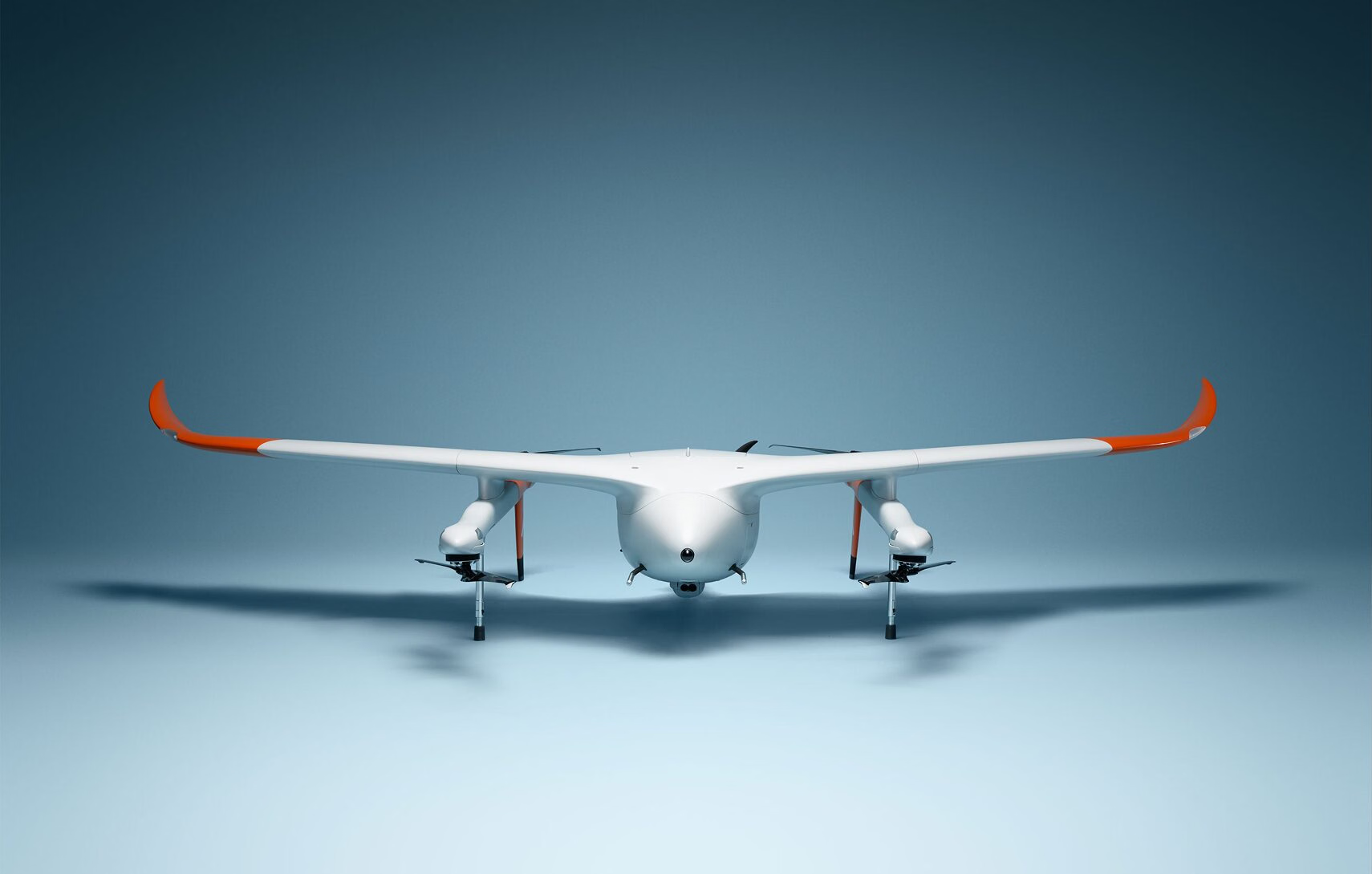
Avy’s Aera carries emergency medical cargo for European health services. A 35 Ah smart pack with DroneCAN integration doubled flight time to two hours, with state-of-charge and state-of-power prediction on board.
Case study
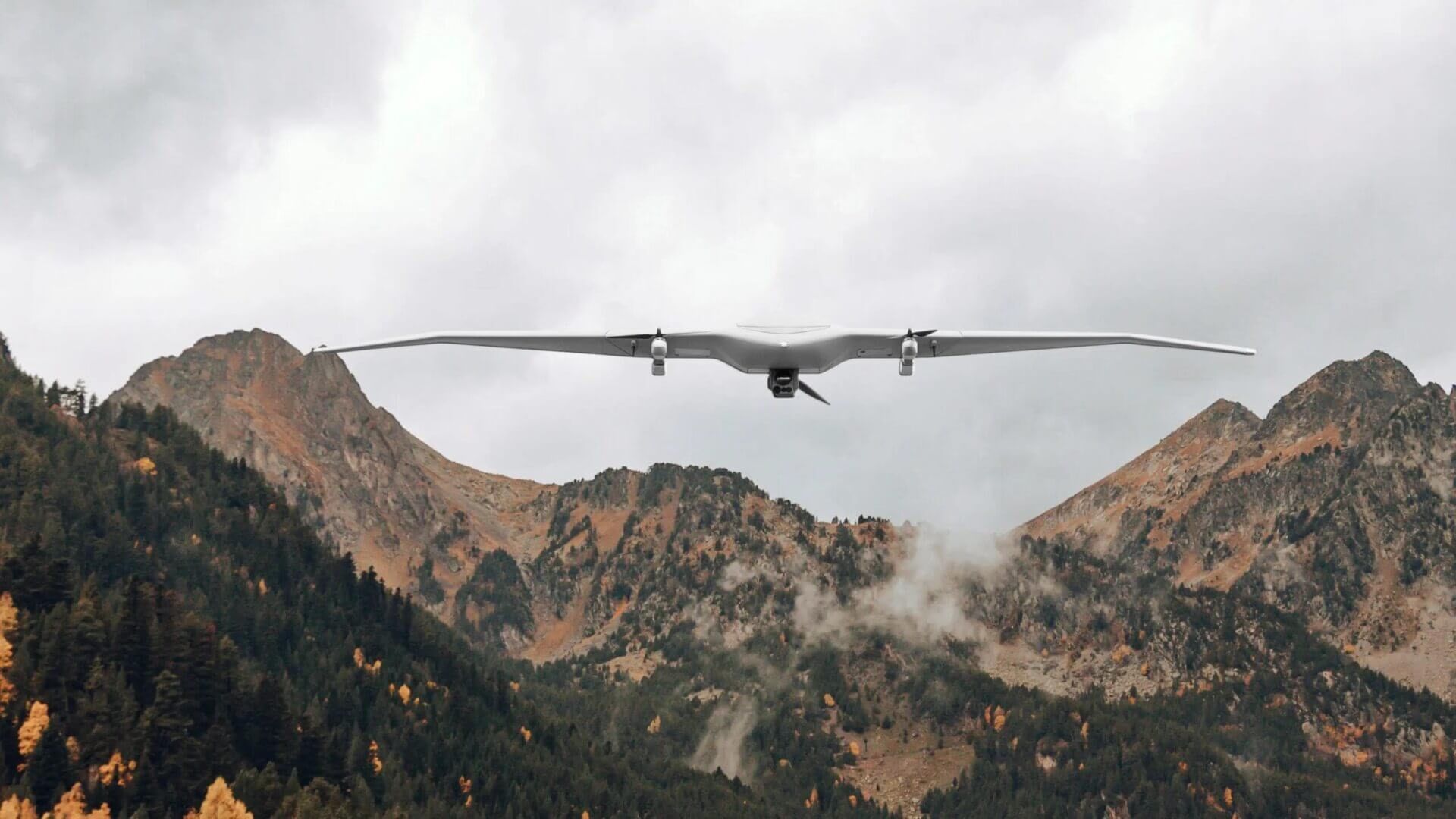
The DeltaQuad Evo flew for 8 hours and 55 seconds across more than 500 km through rain and 22-knot winds, landing with reserve. It brings Group 3 endurance to a Group 1 airframe on 450 Wh/kg lithium-metal packs.
Challenge
Deliver persistent ISTAR endurance while retaining the operational simplicity and size of a Group 1 airframe.
Solution
Solid-state lithium-metal battery packs exceeding 450 Wh/kg, integrated with DeltaQuad’s Evo VTOL platform.
Result
An 8-hour, 55-second flight of more than 500 km through rain and 22-knot winds, landing with energy reserve.
DeltaQuad develops long-range VTOL aircraft for missions that need more time, more range and practical field operations. The Evo platform was built to demonstrate what fully electric fixed-wing VTOL can achieve.
The objective was clear: push endurance beyond the normal limits of a Group 1 aircraft without moving into the complexity of a much larger system.
Tulip supplied solid-state lithium-metal battery packs with an energy density above 450 Wh/kg. The pack gives the DeltaQuad Evo the energy needed for sustained flight while keeping the aircraft operationally practical.
The flight covered more than 500 km in rain and 22-knot winds. After 8 hours and 55 seconds, the aircraft landed with reserve energy remaining.
The record demonstrates Group 3 endurance on a Group 1 airframe. For operators, that creates new opportunities for long-duration missions without relying on combustion propulsion.
Related cases