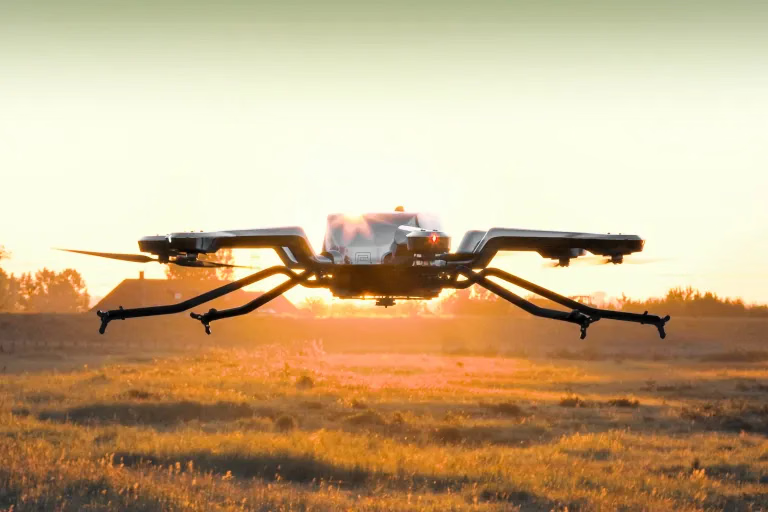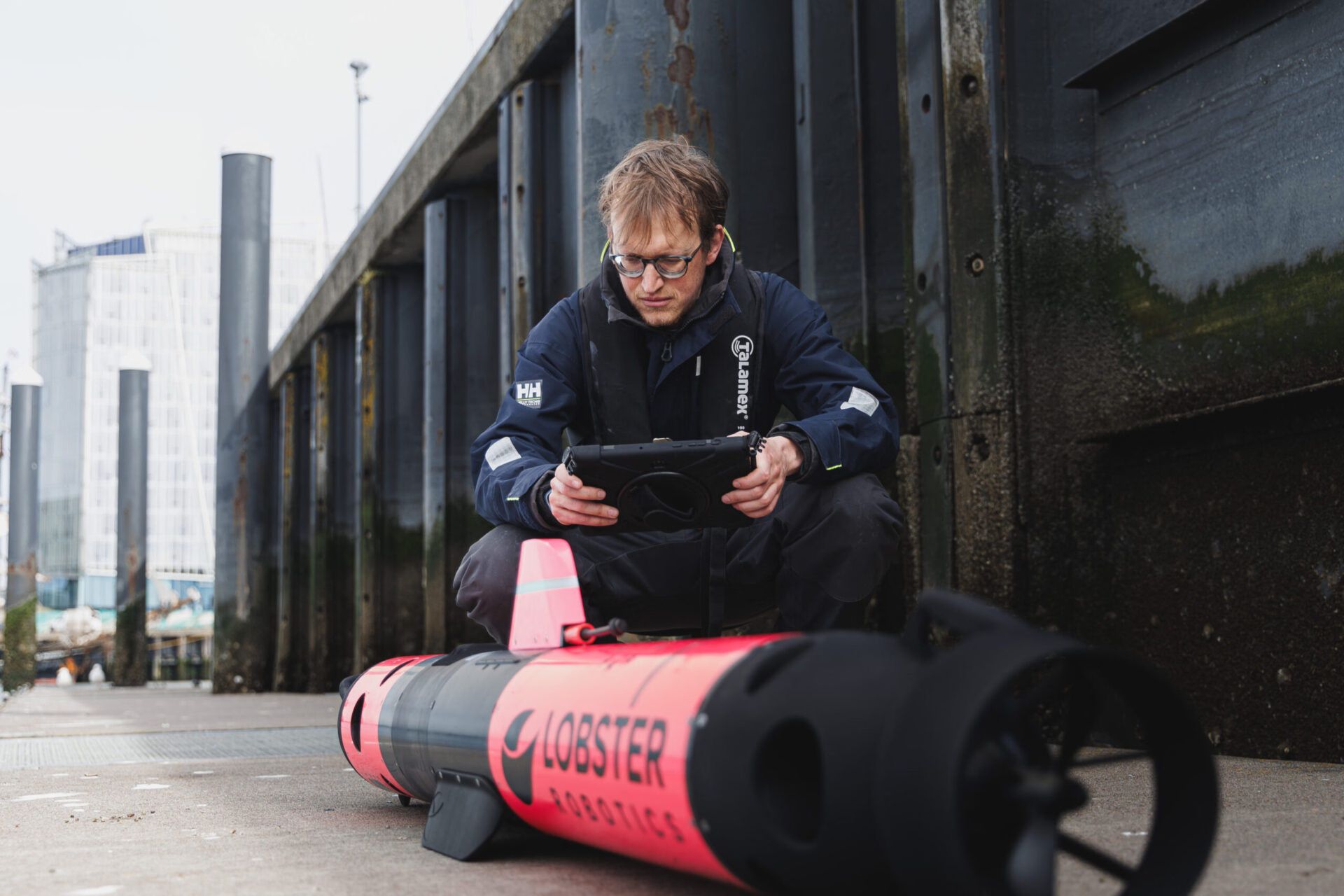
Lobster Robotics needed longer dives without a bigger hull. A high-density pack built on self-fused cells delivers 60% more battery life at the same size and stays serviceable offshore.
/ Case study
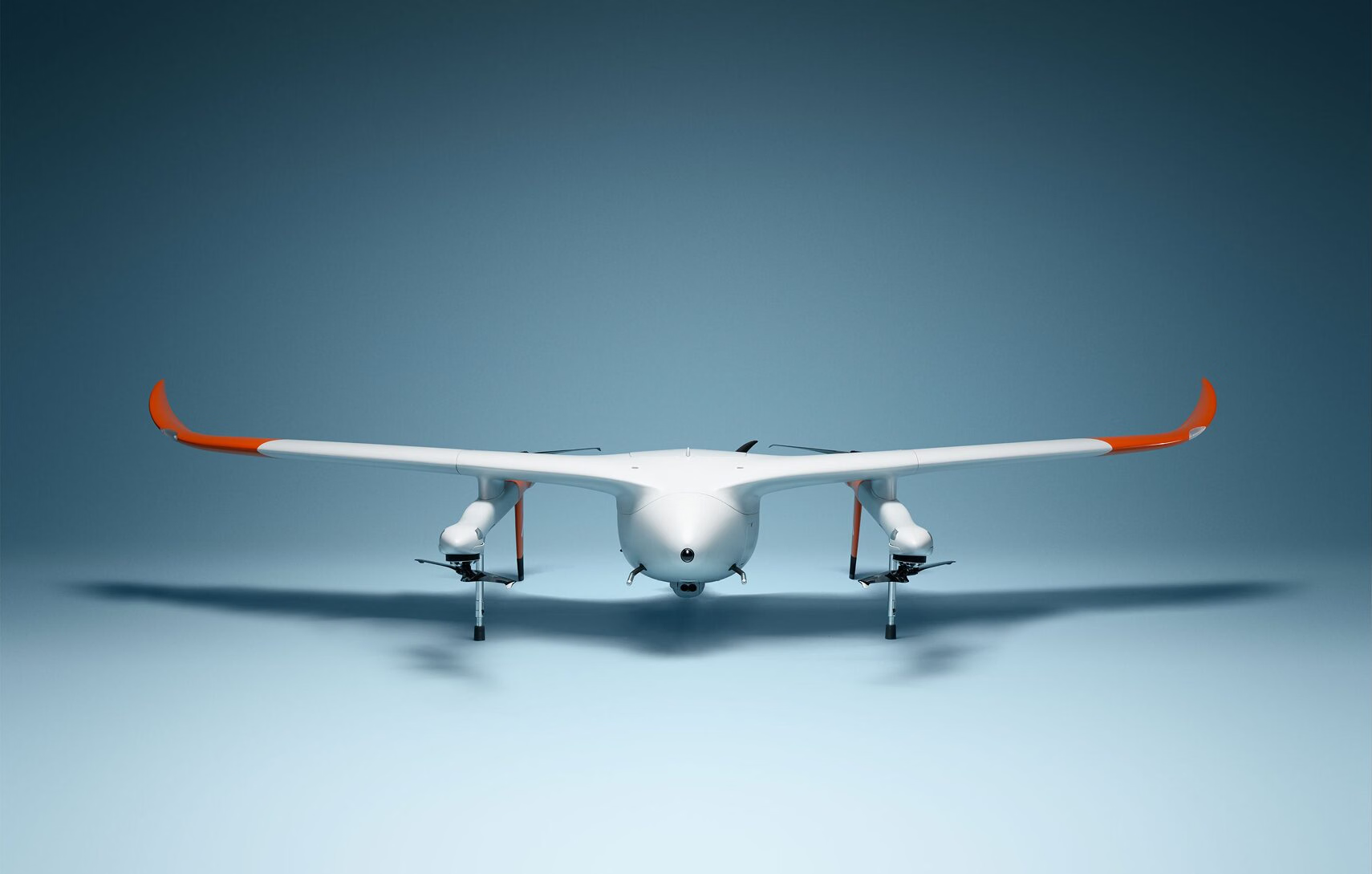
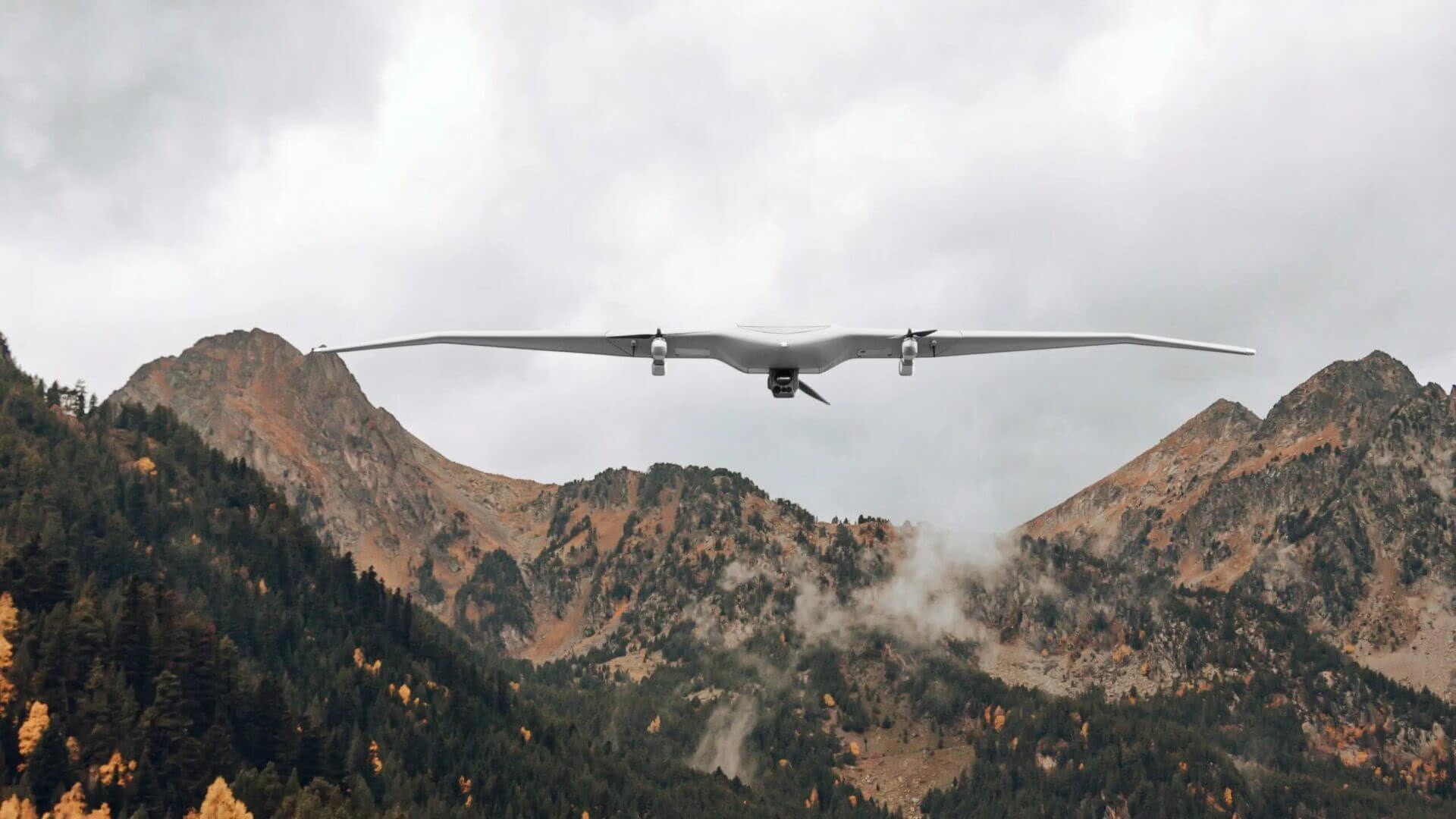
With up to eight hours of flight endurance, the DeltaQuad Evo-LE, a fully electric VTOL drone, gives operators the persistent coverage their missions demand. It started with a one-time record test flight in 2024. Here’s what it took for our two teams to engineer it into a production aircraft.
Challenge
Deliver persistent ISTAR endurance while retaining the operational simplicity and size of a Group 1 airframe.
Solution
Solid-state lithium-metal battery packs exceeding 450 Wh/kg, integrated with DeltaQuad’s Evo VTOL platform.
Result
An 8-hour, 55-second flight of more than 500 km through rain and 22-knot winds, landing with energy reserve.
For drone operators, especially in demanding field conditions, the biggest question is how long their aircraft can stay over the target.
Whether it’s an ISTAR (intelligence, surveillance, target acquisition, and reconnaissance) flight keeping watch over a convoy route, a patrol along a stretch of border, or a relay keeping ground units in contact beyond line of sight, the mission only lasts as long as the battery does. Every flight has to cover three things on one charge: flying out, watching, and flying back. And as the distance between the take-off site and the target grows, more of each flight goes into getting there and back, leaving gaps in coverage and requiring more aircraft to rotate in.
Since its launch in 2022, DeltaQuad’s Evo, the platform the Evo-LE is based on, has given operators up to four and a half hours in the air and up to 3 kg of payload capacity. And although the feedback on the drone was great, the same thing kept popping up: it would be much better if it could fly longer. This was especially true for end users on the front line, who need maximum time on target.
Another issue operators kept running into was that landings in the dark or on rough ground could damage the aircraft, leading to long maintenance downtime.
With this feedback, DeltaQuad’s engineers set to work, but there were trade-offs to be made. The cells that store the most energy are usually the worst at delivering power, and a VTOL aircraft draws a burst of current at every take-off and landing. The battery also had to fit a fixed space and weight budget, and work from -20 to +45 °C.
And, of course, everything had to be consistent: whatever flew once in a test had to work, flight after flight, in every single aircraft.
DeltaQuad was already flying with our batteries, so our two teams put their heads together and asked: Is there a battery technology that could give the Evo much longer endurance?
Proving the ceiling
First, they had to find out whether longer flights were even possible.
In 2024, the DeltaQuad team took the Evo as it was, swapped its standard batteries for our newest lithium-metal packs, and removed the payload and everything else the aircraft didn’t need.
This Evo was taken out for a test flight, and it broke the record for the longest fully electric VTOL UAV flight in Europe. Flying through rain and 22-knot winds (about 40 km/h), it stayed up for eight hours and 55 seconds, covered more than 500 km, and still landed with energy to spare.
The record proved that longer flights were possible. But in practice, an aircraft always flies with a payload, such as a camera or another sensor. This flight had none, so it all happened under highly idealized conditions.
“It flew, and it flew long, so it looked promising,” says Mark van Schie, Head of Product at DeltaQuad. “But it was still anything but a product.”
Turning it into a production aircraft
DeltaQuad and our team set to work, starting from a prototype.
The first challenge was that cells holding that much energy can’t push out much current at once. And a VTOL aircraft gulps current at take-off and landing. One pack couldn’t keep up, so the Evo-LE carries two, wired in parallel.
In turn, these two packs added weight, calling for a heavier VTOL drivetrain. And the heavier drivetrain meant resizing the whole electrical architecture, because running the new packs through the old one would have pushed the system far beyond its specs.
For a one-time test flight, that didn’t matter. But an aircraft that has to fly again and again can’t work that way: sooner or later, it becomes a safety issue. Getting it right took a lot of engineering and testing, and plenty of trips back to the drawing board.
The airframe had to keep up, too.
Operators had asked for an aircraft that could survive a hard landing, so DeltaQuad built the Evo-LE on Block 3, the latest version of the Evo airframe, with a much tougher composite structure. After a hard landing, the landing legs detach to protect the airframe, and they can be clicked back in or replaced, so the airframe itself doesn’t need repair or replacement. Together with the tougher structure, this makes the aircraft more robust, if a bit heavier.
Inside the pack, we faced the same squeeze on a smaller scale. DeltaQuad set a fixed space, a target capacity, and a weight limit for each 48 Ah UAV battery pack. “If you added up just the cells we chose, there would be very little weight budget left for everything else,” says Mark van Hoeve, one of our engineers. Along with the limited space, it was the biggest design challenge.
On top of that, cells with that much energy density swell in thickness over their life, so they have to stay under constant pressure. We solved this by wrapping them in a carbon fiber housing with cutouts to save weight. The constant pressure also improves the packs’ performance and lifetime.
Last but not least, we had to prove the cells and packs.
“The supplier’s cell spec is our starting point, but we always validate it for the specific use case,” says Van Hoeve. DeltaQuad shared its flight profile, and we replayed it on single cells and then on complete packs, in a climate chamber.
Several packs were tested all the way to the end of life. The results fed back into the design, starting with sturdier cell connections. For series production, laser welds replaced soldered joints, and the supply chain was set up well ahead, so pack performance stays consistent.
“The energy density of the batteries was the real enabler,” Van Schie says. “The dual-battery setup, the heavier drivetrain, and the new electrical architecture all followed from it. Without that, it wouldn’t have been possible.”
Under the hood: the Evo-LE battery packs (optional box)
Packs: two per aircraft in parallel, 48 Ah each
Housing: carbon fiber, keeps the swelling cells under constant pressure
Connections: laser-welded, with reinforced cell-to-cell current paths
Validation: cell level, then pack level, against DeltaQuad’s flight profile; climate chamber; several packs tested to end of life
Aircraft operating temperature: -20 to +45 °C ambient
Stat row
Up to 8 h flight endurance | Up to 480 km range | Up to 120 km radio range
Actual performance depends on vehicle configuration, mission profile, and operating conditions.
DeltaQuad launched the Evo-LE in September at the Euro Defence Expo (EUDEX), and it’s available to order now. It features a dual-battery setup, a heavier VTOL drivetrain, a redesigned electrical architecture, and a tougher Block 3 airframe.
Together, our lithium-metal packs (405 Wh/kg at pack level) and the dual-battery setup give it up to eight hours of flight endurance, nearly double the Evo’s four and a half hours. The Evo-LE is designed for missions where endurance comes first, and puts endurance before payload flexibility. Where the Evo carries up to 3 kg and flies with one or two packs, the Evo-LE takes up to 1.5 kg and always flies with two.
So what does that look like on a real mission?
With an ISR (intelligence, surveillance, and reconnaissance) camera, the Evo-LE stays up for just over five hours while flying at around 1,000 m. The standard Evo, with the same payload, mission profile, and radio, manages about two hours and 20 minutes.
Over the target, the difference is even more striking.
If it takes an hour to fly out and an hour to fly back, the Evo has about 30 minutes left to watch the area. The Evo-LE has about three hours: roughly six times as long as the Evo, from just over twice the flight time. That means operators have fewer gaps in what they see and fewer aircraft to launch and swap out to cover the area. Over a 24-hour stretch of continuous watch, it comes down to around 72 flights and seven aircraft in the air with the Evo, against eight flights and two aircraft with the Evo-LE.
Ultimately, that’s the difference between a record and a product. The record showed eight hours was possible, and the Evo-LE gives operators far more watching time on every flight, and greater odds of mission success.
Flight endurance: up to 8 h
Range: up to 480 km
Radio range: up to 120 km
Payload: up to 1.5 kg
Max take-off weight: 13 kg
Batteries: two of our packs in parallel
Take-off and landing: vertical, no runway
Operating temperature: -20 to +45 °C ambient
Available to order since September 2026
Actual performance depends on vehicle configuration, mission profile, and operating conditions.
With the Evo-LE now on the market, we remain the battery partner for DeltaQuad’s current and evolving platforms. The two companies share a partnership roadmap for what comes next.
Next, the story moves to video, with the engineers behind the Evo-LE showing how the aircraft and its batteries came together.
Want to see the test data behind the packs? [Request the test reports.]
DeltaQuad designs and manufactures electric fixed-wing VTOL unmanned aerial systems in the Netherlands for defense and security customers. Its platforms combine long endurance, vertical take-off and landing, and adaptable mission configurations to support aerial intelligence in demanding operational environments. DeltaQuad works closely with end users and partners to develop, deliver, and support mission-ready capability.
Planning your next long-endurance platform? Start with the battery. We build high-density packs for unmanned systems in the Netherlands. Request the tech specs, or talk to one of our engineers.
Related cases